
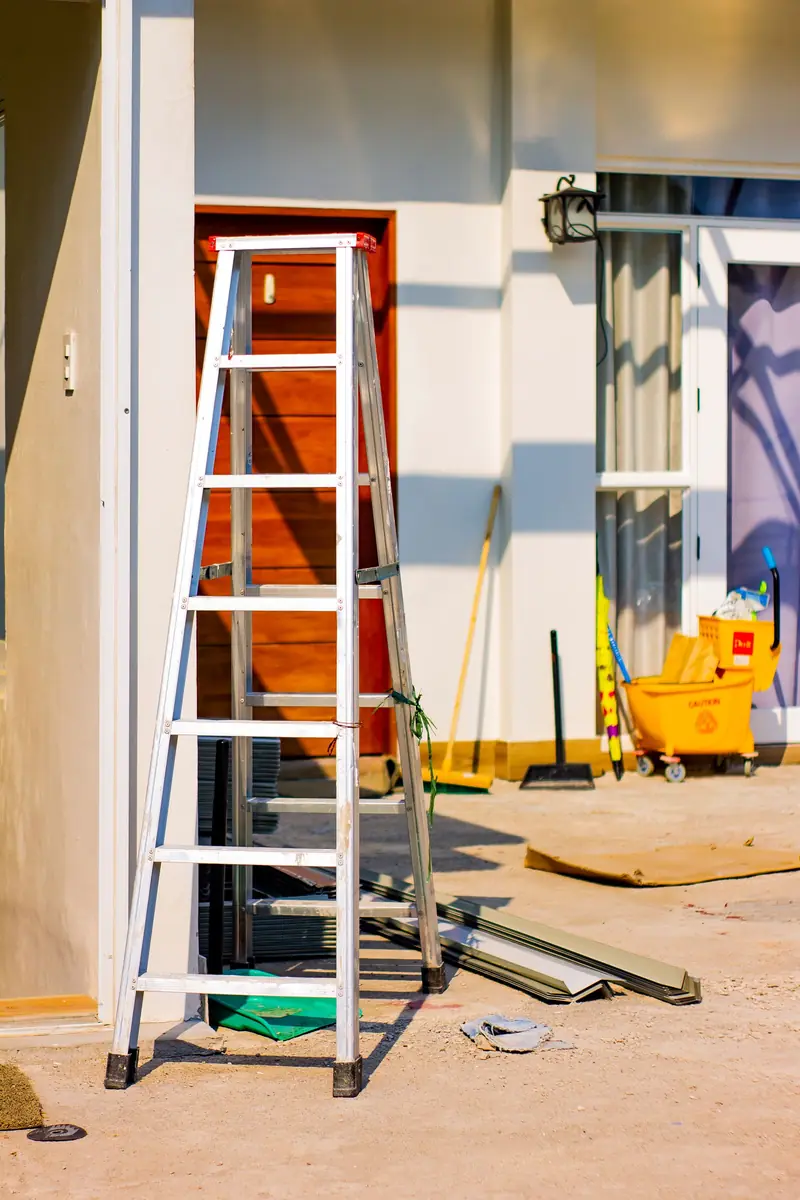
Building work leaves a specific kind of mess, and it is not the mess most people picture. It is not rubble and offcuts, which the builders usually clear. It is dust: fine, pale, and everywhere. It coats every surface, sits on top of doors and inside cupboards, and then, maddeningly, comes back after you have cleaned it once.
Understanding why is the key to getting a renovated property genuinely clean rather than just wiped down.
Why construction dust is different
Household dust is relatively heavy and settles once. Construction dust, from plaster, sanding, cutting and general works, is much finer. It stays suspended in the air for a long time after the work stops, then settles slowly over hours. Clean a room while there is still dust in the air, and within a day the surfaces you wiped are coated again.
That is why after builders cleaning is done in stages. A first pass removes the bulk of the settled dust. Time is allowed for the airborne dust to settle. A second pass then clears what has come down since. Skipping the second pass is the single most common reason a “cleaned” renovation still feels gritty a week later.
What after builders cleaning covers
Beyond the dust, a renovation leaves residues that a normal clean is not set up for:
- Fine dust removed from every surface, high and low, including tops of doors, frames, skirtings and inside new cupboards.
- Paint splashes and flecks lifted from floors, glass, sockets and fittings.
- Adhesive, silicone and plaster residue removed from surfaces without scratching them.
- Protective film and stickers peeled from new windows, appliances and units.
- New windows and glass cleaned inside and out, frames and sills wiped.
- Floors vacuumed thoroughly, then washed, with grout cleared of the grey film that settles into it.
The care that matters: not damaging new finishes
The reason after builders cleaning is a specialist job is not just the dust, it is the surfaces. Everything is new. A new painted wall marks easily. A new worktop or a glass shower screen scratches if you attack dried plaster with the wrong pad. New flooring can be dulled by the wrong cleaner.
Good after builders cleaning is as much about knowing what not to do as what to do: using the right approach for each new finish so the residue comes off and the surface underneath is left exactly as the trades intended. That knowledge is what protects the money you have just spent on the renovation.
When to book it
Timing matters. Book the clean too early, while dusty work like sanding or cutting is still to come, and the dust simply returns. The sensible point is once the messy trades are finished and only the final fit-out or your own move-in remains.
If you are handing the property back to a client, the after builders clean is what turns “the work is done” into “the property is ready”, and it is worth building into the schedule rather than treating it as an afterthought on the last day.
Should you do it yourself?
You can, for a small job. But be honest about two things. First, the staging: one pass will not hold, so you are committing to cleaning the same surfaces more than once over a day or two. Second, the risk: dried plaster and paint on new finishes are easy to remove badly, and a scratch on a new worktop costs far more than the cleaning would have.
For a full renovation, or anywhere new finishes are involved, this is usually the job to hand over.
The short version
Construction dust is fine, it stays airborne, and it resettles, so after builders cleaning is done in stages, not one pass. Beyond the dust it is about lifting paint, adhesive and residue from brand-new surfaces without damaging them. Book it once the dusty trades are finished, and treat it as the step that makes a renovation genuinely handover-ready.
If that is where your project is, our after builders cleaning clears renovated London properties in stages, with care taken around every new finish.